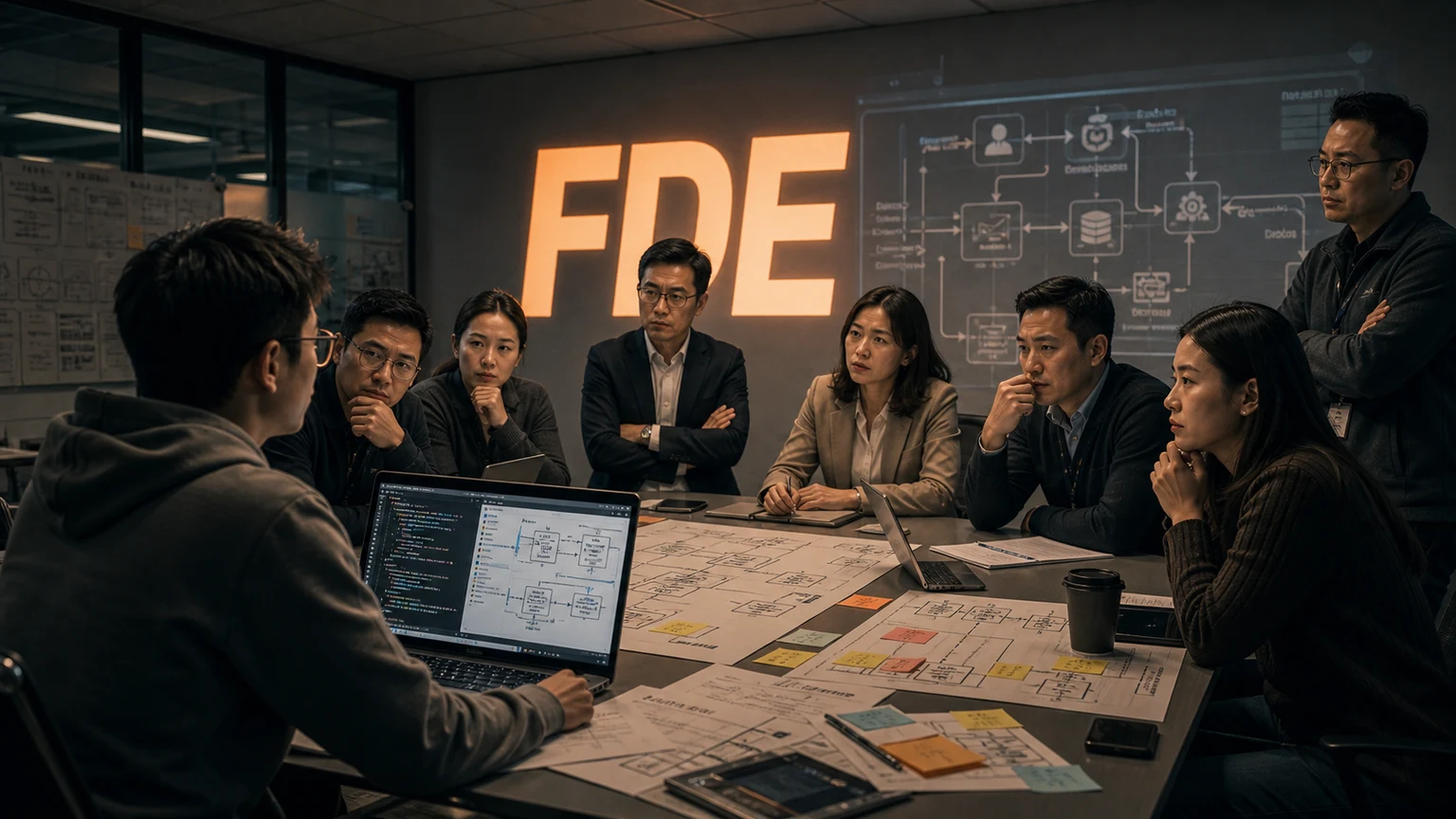
After writing the last article, I kept thinking about one question.
If AI is repricing every job seeker, who does it reprice first?
The last piece was about PMs.
The traditional PM who only coordinates, meetings, requirements, and other people's execution is being repriced. The more valuable PM will look more like a Builder: able to judge direction, build a first version, and push an idea into a verifiable stage.
But this is not only happening to PMs.
I recently saw a day-in-the-life video from a big-company FDE.
It made something obvious: engineers are going through the same shift.
PMs are being asked to move from coordinators to builders.
Engineers are being pushed from backend implementers into customer sites.
This is FDE
Forward Deployed Engineer
An engineering role that AI has pushed back onto the front line
1. What is FDE?
Many people see FDE and assume it is a new title. It is not.
FDE became widely discussed because of Palantir.
Palantir has long had Forward Deployed Software Engineers. Its customers are too complex for simple SaaS onboarding: government, defense, healthcare, finance. You do not sell them an account and let them click around until value appears.
The real world is not that clean.
Customer data is messy. Permissions are scattered. Processes carry years of history. Business teams often cannot explain what they really need. Technical teams may not know where the business is actually stuck.
So Palantir needed engineers who would go directly into customer environments: listen to the business, break down processes, inspect data, write code, and make the system actually fit inside the organization.
That is the older life of FDE.
It is not someone sitting in the backend waiting for requirements.
It is someone sent into a messy site to pull the problem out.
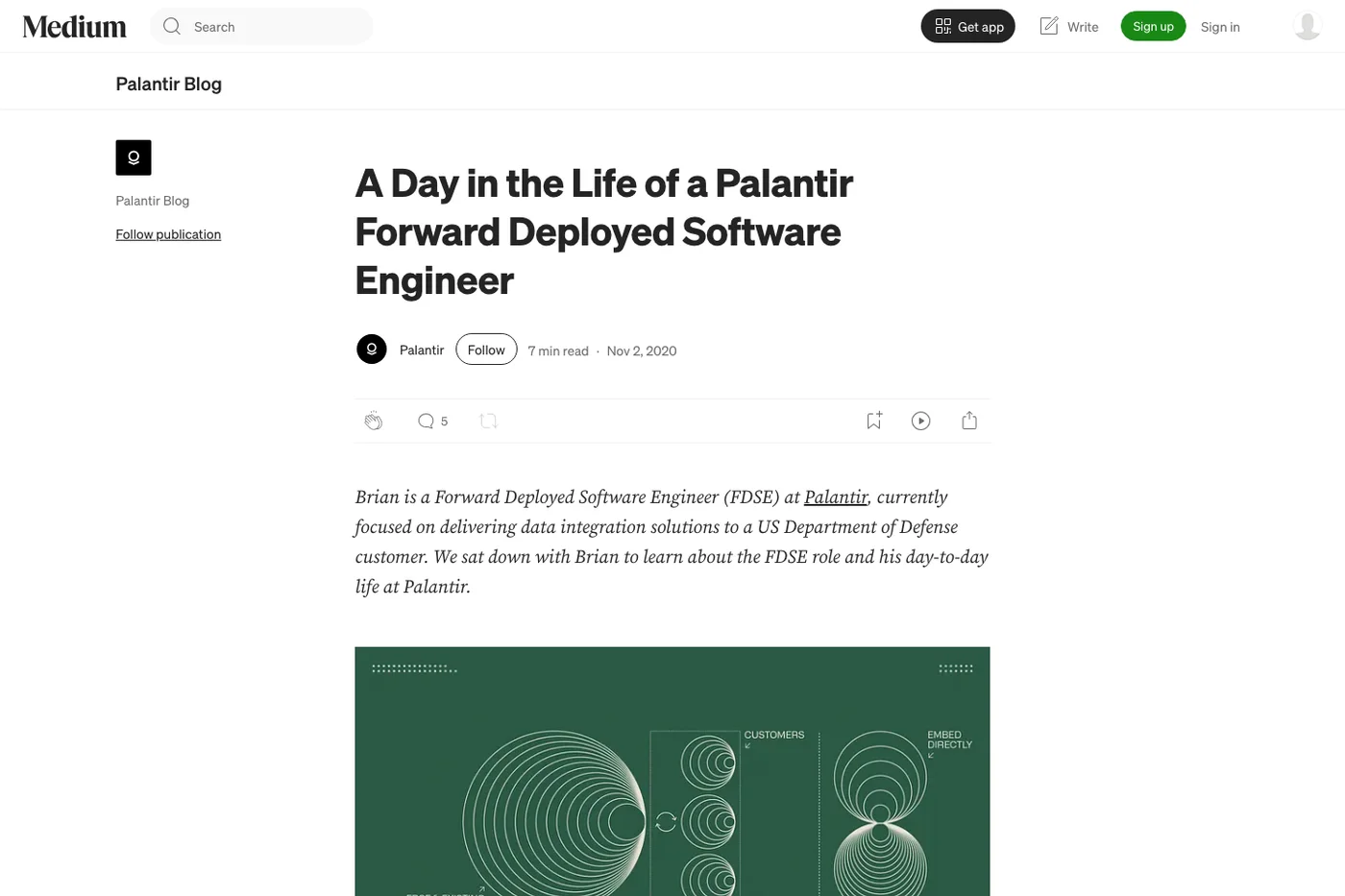
Palantir once made the distinction very directly: a traditional software engineer builds one capability for many customers. An FDE enables many capabilities for one customer.
That line separates two kinds of engineers.
One starts from product.
The other starts from the field.
The old engineering path was clean. PM writes requirements. Engineer takes requirements. Scope is clear. Timeline is clear. Code ships.
That works only when the problem has already been cleaned up by someone else.
FDEs do not live in that world. They face the tangle before it has been translated into requirements.
A customer says they want AI, but may not know which workflow wastes the most time. A customer says they want automation, but the real blocker may be data fields that have not been standardized for ten years. A customer says they want an agent, but permissions, APIs, approvals, compliance, and audit trails may all be missing.
At that point, only knowing how to code is not enough, because nobody even knows where the code should go.
2. AI companies were educated by enterprise customers
After 2025, FDE suddenly became hot again in AI circles.
a16z wrote a direct piece on why Forward Deployed Engineers were becoming one of the hottest jobs in startups.
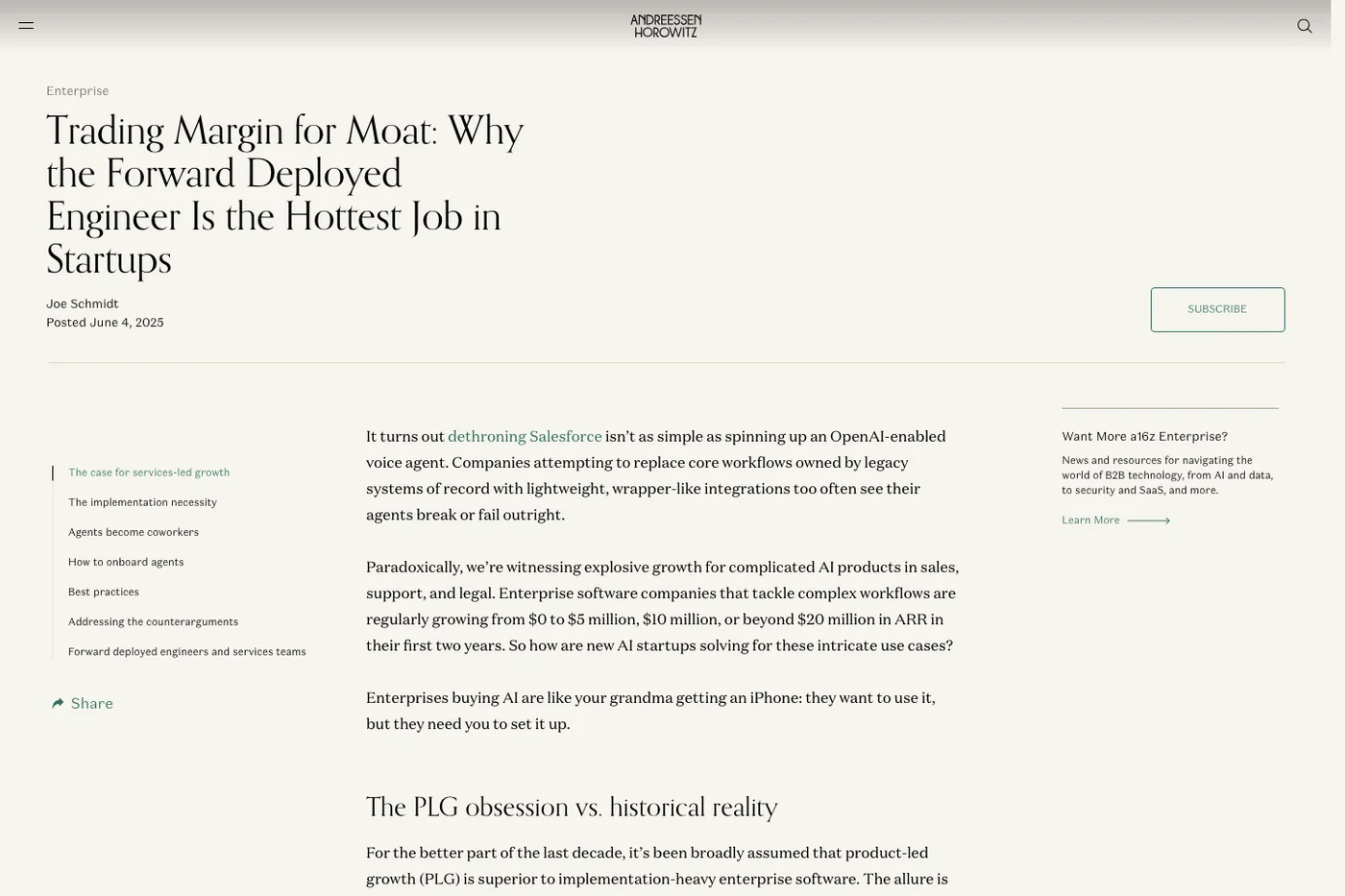
This is not because investors suddenly like a new title.
It is because AI companies got educated by enterprise customers.
At first, many people thought stronger models would naturally make enterprises buy. Then reality came in.
The demo is beautiful. The launch event is beautiful. The benchmark is beautiful.
But when an enterprise actually tries to use it, the questions arrive immediately.
Where is the data? How do permissions work? Who owns rollout? How is impact measured? Who is responsible when it fails? Will employees use it? Can it connect to the old system? What is the ROI?
That is when you realize the hardest part is not model ability. The hard part is connecting the model into the business and making it land.
OpenAI's recent moves make this very clear.
In May 2026, OpenAI announced the OpenAI Deployment Company and acquired Tomoro. The company said the acquisition would bring about 150 Forward Deployed Engineers and Deployment Specialists.
150 people.
Not 15. Not a few solution engineers.
OpenAI already has models, research, products, APIs, and an ecosystem. It still needs a dedicated deployment company. It still needs FDEs embedded inside customer organizations.
That basically admits one thing: models alone are not enough. APIs alone are not enough. AI entering the enterprise requires people to go down into the site.
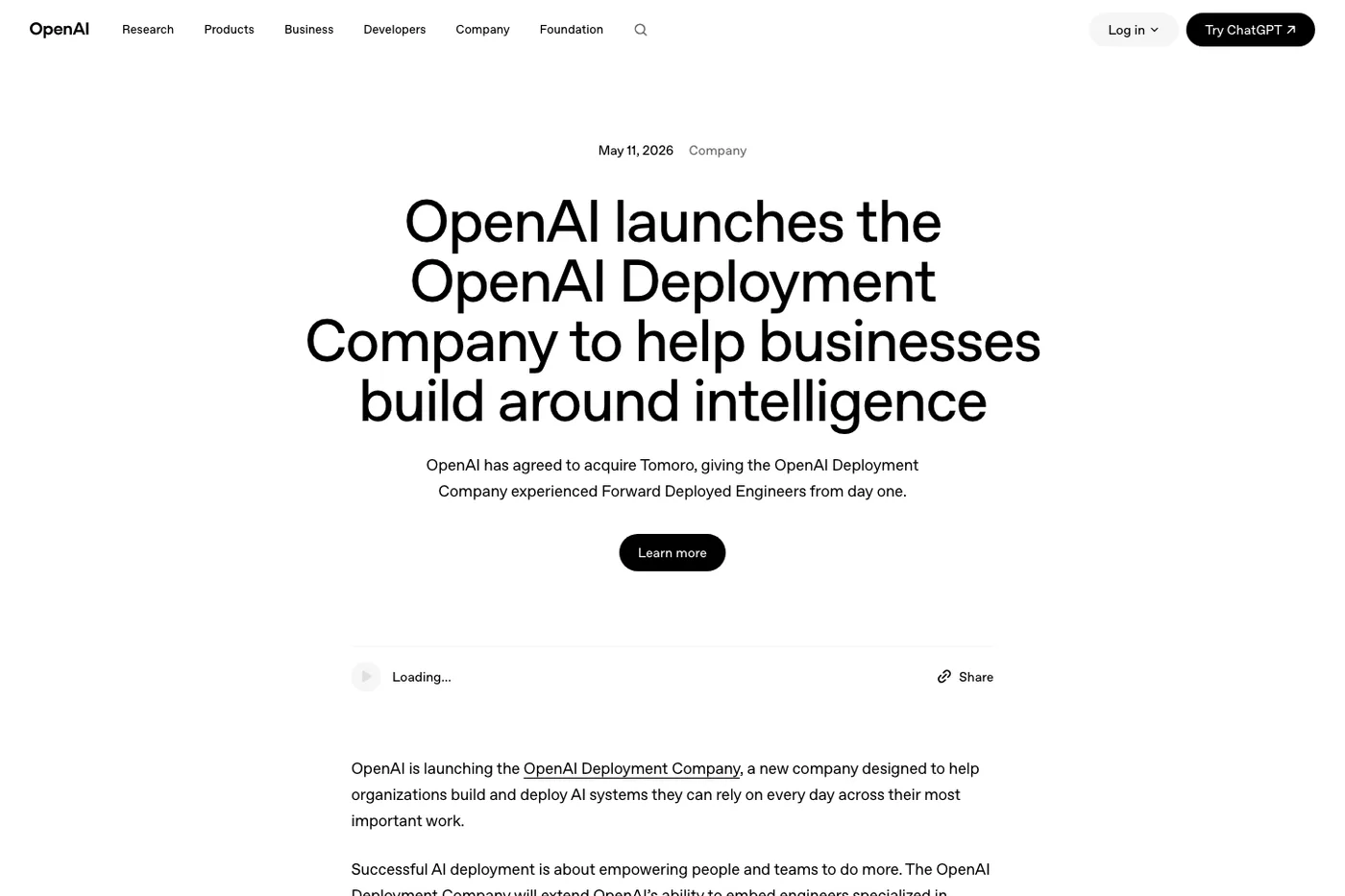
OpenAI's FDE job page is also direct. FDEs turn research breakthroughs into production systems.
Production systems.
That phrase matters. Production systems are used by real employees, connected to real data, exposed to real pressure, and judged by real outcomes.
The role includes discovery, technical scoping, system design, build, and production rollout. That is no longer the old boundary of engineering.
It is asking whether you can find the problem inside customer chaos, design the system, build it, and push it into production.
Anthropic is similar. Its FDE role talks about embedding with strategic customers, building production applications with Claude, and delivering MCP servers, sub-agents, agent skills, and production workflows.
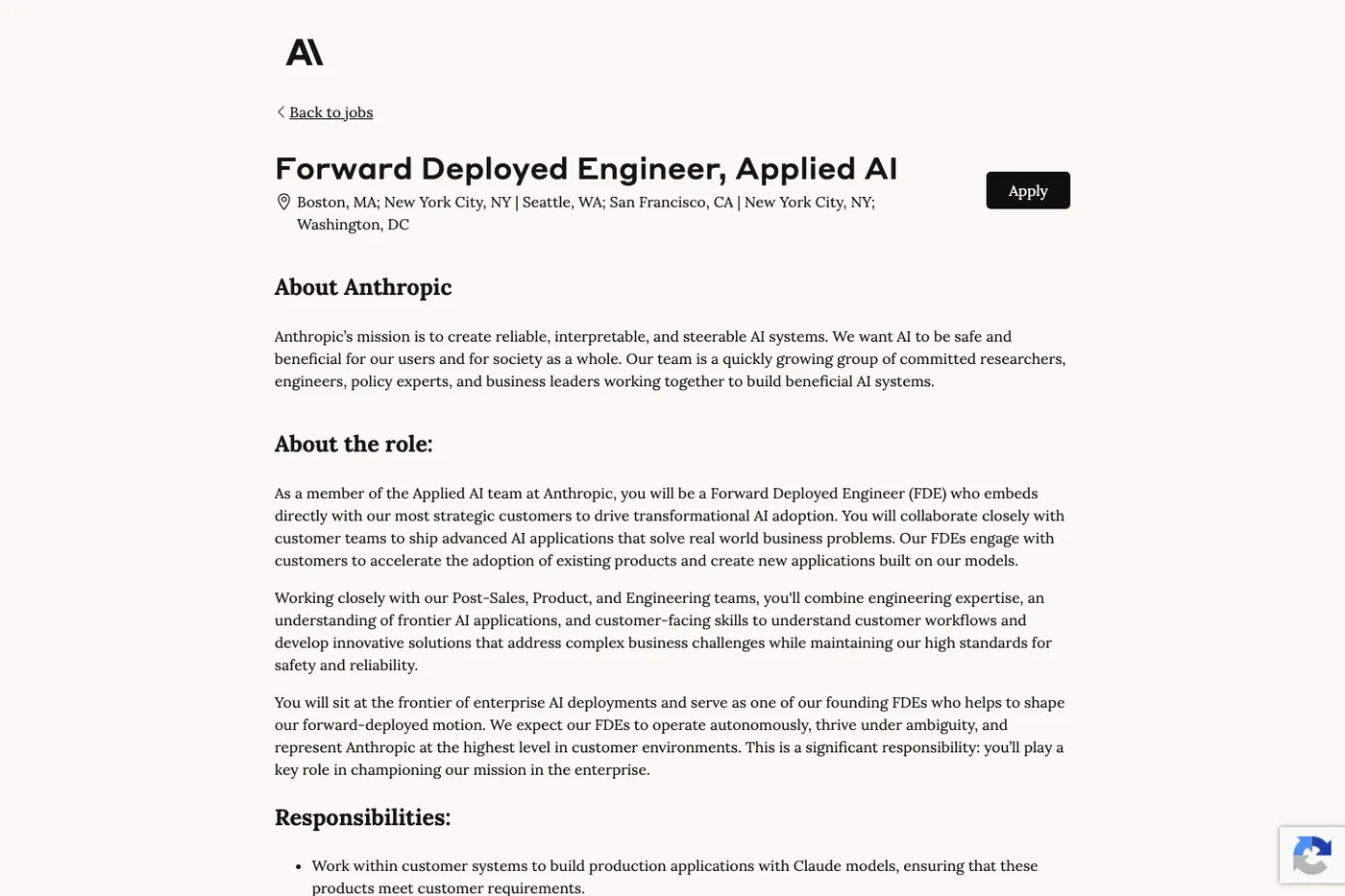
Claude. MCP. sub-agents. agent skills. production workflows.
This is no longer the stage of building a cute AI assistant. AI is starting to dig into the real workflow of companies.
Software used to be a tool. AI now looks more like a new operating layer. But an operating layer does not run because the pitch deck says so. Someone has to install it into the customer's messy machine.
That person is the FDE.
So FDE becoming hot again is not just a job-market story inside engineering. It is a signal that the way work gets done is changing.
The past of FDE came from complex Palantir customer sites. The present of FDE comes from AI companies realizing that sending models into real enterprises requires the same kind of field muscle.
In the end, the question in the AI era is not what your title is. It is whether you can move something from idea, model, code, and process into a real result.
The last article said PMs need to become Builders.
This one says engineers need to walk into the field.
AI is pulling everyone out of the comfort of job boundaries.